Load forecasting for your balancing group more accurate than standard load profiles
Standard load profiles describe an average customer, and your portfolio isn't one. alitiq forecasts electricity, gas and heat demand with AI models trained on your portfolio's meter data: for profiled, interval-metered and smart-meter customers, from intraday to year-ahead.
The alitiq load forecast at a glance
- up to €10,000
- savings per GWh and year through consistently optimised forecasts
- up to 20 h
- less work per week thanks to automated, continuously updated forecasts
- Intraday to year‑ahead
- every horizon for balancing and procurement
- Power · Gas · Heat
- one forecasting platform for every type of load
Why standard load profiles are no longer enough
Standard load profiles such as H0 for households or G0 to G6 for businesses describe the typical consumption of an entire customer group. In Germany they are essentially based on measurements from the 1990s and know neither the current weather nor the specifics of your grid area. Even updated BDEW profiles such as H25 remain averages.
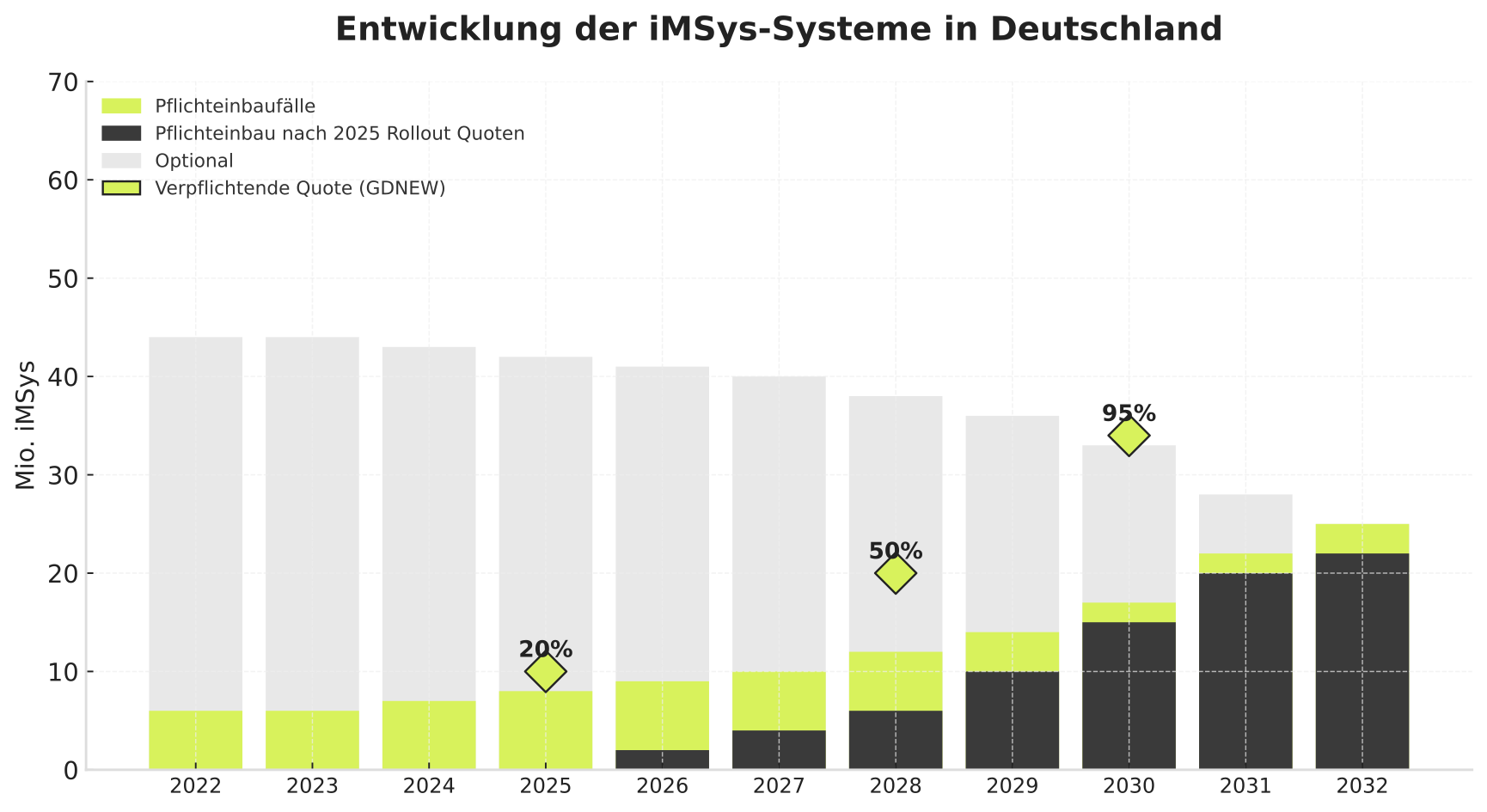
At the same time, your customers' consumption is changing faster than any profile: PV self-consumption, heat pumps, wall boxes and batteries shift load curves differently from one household to the next. And with the smart meter rollout, real quarter-hour values are available for more and more customers. Consumption will have to be balanced and procured much more precisely.
Where deviations from the profile cost money
Interval-metered and smart-meter customers
For metered customers, actual consumption counts. Every deviation from your forecast ends up in your balancing group as balancing energy.
Analytical profile method
The grid operator derives the consumption of profiled customers from the actual residual load. Weather and customer behaviour hit your balancing group directly.
Synthetic profile method
Differences between profile and actual consumption are settled through the surplus and shortfall reconciliation. A realistic forecast shows you early what to expect.
How alitiq forecasts your load
Instead of one profile for everyone, the alitiq engine, a machine learning framework built for the energy industry, learns how your customers actually behave.
Trained on your meter data
The models learn from your portfolio's load curves, whether individual metered customers, customer groups or entire balancing groups. Data processing scales to millions of metering points, including smart meter data.
AI-based clustering
The AI automatically finds the spatial and logical clusters that give the lowest forecast errors. Even hard-to-predict customers become manageable.
Weather data already integrated
High-quality weather data from the German Weather Service, ECMWF and other sources flows in automatically. You don't need to source or prepare weather data.
Continuously updated
New measurements and weather forecasts flow in continuously. The forecast adapts to changes in your portfolio instead of staying fixed.
Forecasts for every horizon
From intraday corrections to forward procurement: one forecasting engine for every decision around your balancing group.
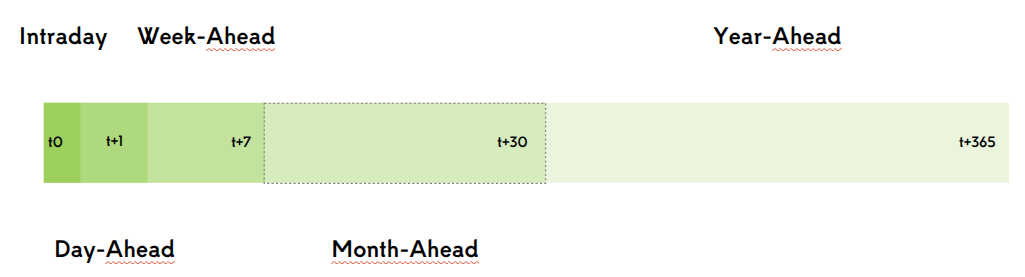
- Intraday
- Corrections with the latest measurements and re-trading on the intraday market
- Day-ahead
- Schedule nomination and procurement on the spot market
- Week-ahead
- Procurement planning for the coming days
- Year-ahead
- Volume planning for forward procurement and strategy
Electricity, gas and heat from one platform
Electricity
Profiled, interval-metered and smart-meter customers, individual large consumers or the whole balancing group, in quarter-hour resolution.
Gas
Gas demand forecasts for procurement and balancing, based on your meter data and current weather forecasts.
Heat and district heating
Heat load forecasts for district heating networks, with a dedicated model per network.
Case study: Energie SaarLorLux
alitiq set up a dedicated AI model for each of four district heating networks. Forecasts are calculated four times a day with the latest weather information and have noticeably reduced the volatility in the load time series.
Read the success storyEasy integration
The forecasts arrive where you need them, without a big IT project.
REST API
Create load time series, send measurements, retrieve forecasts: with your own IDs, in your time zone and with correct handling of daylight saving time.
Python package
With alitiq-py, you get load forecasts directly as pandas-compatible data.
File delivery
Forecasts as files via sFTP, email or S3, with no development effort on your side.
Help shape the forecasting platform of the future
Energy suppliers can actively influence how the platform evolves: from requirements for smart meter data and aggregation to integration into existing systems.
Keep balancing costs under control
Every deviation from your nominated schedule costs balancing energy. See how more accurate forecasts shrink your imbalances and how much you could save:
Reduce balancing costs and calculate your savingsFrequently asked questions about load forecasting
What is a standard load profile (SLP)?
A standard load profile is a typified consumption curve for customers without quarter-hourly metering, such as households (H0) or businesses (G0 to G6). Grid operators and suppliers use it to represent these customers' consumption in balancing and procurement, because no measured load curves are available.
Why are standard load profiles no longer enough for forecasting?
They describe an average and know neither the current weather nor the structure of your portfolio. PV self-consumption, heat pumps and e-mobility are making load curves increasingly individual. Models trained on real meter data represent how your customers actually behave.
What is the difference between profiled (SLP) and interval-metered (RLM) customers?
For interval-metered (RLM) customers, consumption is recorded every quarter-hour; in Germany this usually applies from an annual consumption of 100,000 kWh. Profiled customers have no such metering, so their consumption is represented by a standard load profile.
What role do smart metering systems (iMSys) play?
Smart metering systems record quarter-hourly values for smaller customers too. With the smart meter rollout, more and more real load curves become available, and consumption has to be balanced more precisely. The alitiq engine is built to process these data volumes and turn them into forecasts.
What data does alitiq need for a load forecast?
For each load time series, a name, coordinates and optionally your own ID are enough, plus historical measurements, usually in quarter-hour resolution. Measurements sent continuously keep the forecast up to date.
Which horizons does alitiq forecast?
From intraday through day-ahead and week-ahead to year-ahead. You choose the resolution when retrieving forecasts; the default is 15-minute values.
Does alitiq also forecast gas and heat demand?
Yes. Besides electricity, alitiq forecasts gas and heat demand, including district heating networks. For Energie SaarLorLux, for example, a dedicated AI model runs for each of four district heating networks.
How much can better load forecasts save?
That depends on your portfolio and your current method. With consistently optimised forecasts, savings of up to €10,000 per GWh and year are possible. A forecast benchmark with your own data shows what it means for you.
How can I check the forecast quality?
The API lets you retrieve earlier forecasts as well as the latest one and compare them with your measurements. In the forecast benchmark, we compare the alitiq forecast with your current method.
Your portfolio versus the standard load profile
In the forecast benchmark, we compare the alitiq forecast for your portfolio with your current method, based on your own meter data. You see what better forecasts mean for your balancing group.