The 1/4-Hourly Day-Ahead Market & The Illusion of Better Forecasting
For those not deeply in the energy industry: Electricity from 🌬️ wind and ☀️ solar PV power plants is often traded in the short-term on the EEX – the European Energy Exchange. Think of it like a stock exchange, but for energy.
The Shift to 15-Minute Intervals
📊 Traditionally, short-term contracts were traded in 15-minute intervals (intraday), while the day-ahead market worked with hourly intervals. Now, the shift is happening: the day-ahead market is moving to 15-minute contracts.
✅ Advantage: This makes balancing easier in theory.
⚠️ But beware: It doesn't mean forecasts suddenly become more accurate.
Why Forecasts Don't Automatically Improve
Why? Because numerical weather prediction (NWP) models struggle to capture sub-hourly cloud development 🌥️, even in the short term. For very short horizons, we can use satellite images 🛰️ to improve solar forecasts (something we're working on at Alitiq with Ventus Technologies in the NowcastAI project).
👉 But for day-ahead forecasts, such real-time data isn't available. The expectation that balancing becomes much easier might therefore be an illusion.
The Technical Reality
I illustrated this using forecasts from the DWD ICON-D2 model. It produces 15-minute forecasts – but here's the catch:
- The model integrates weather equations over 1–2 minutes
- Results are aggregated into quarter-hourly steps
- This introduces "noise" 🌪️ – forecasts might capture the overall trend (e.g., decreasing afternoon solar production), but often not at the right time or location
Hourly vs. 1/4-Hourly Market Schedule
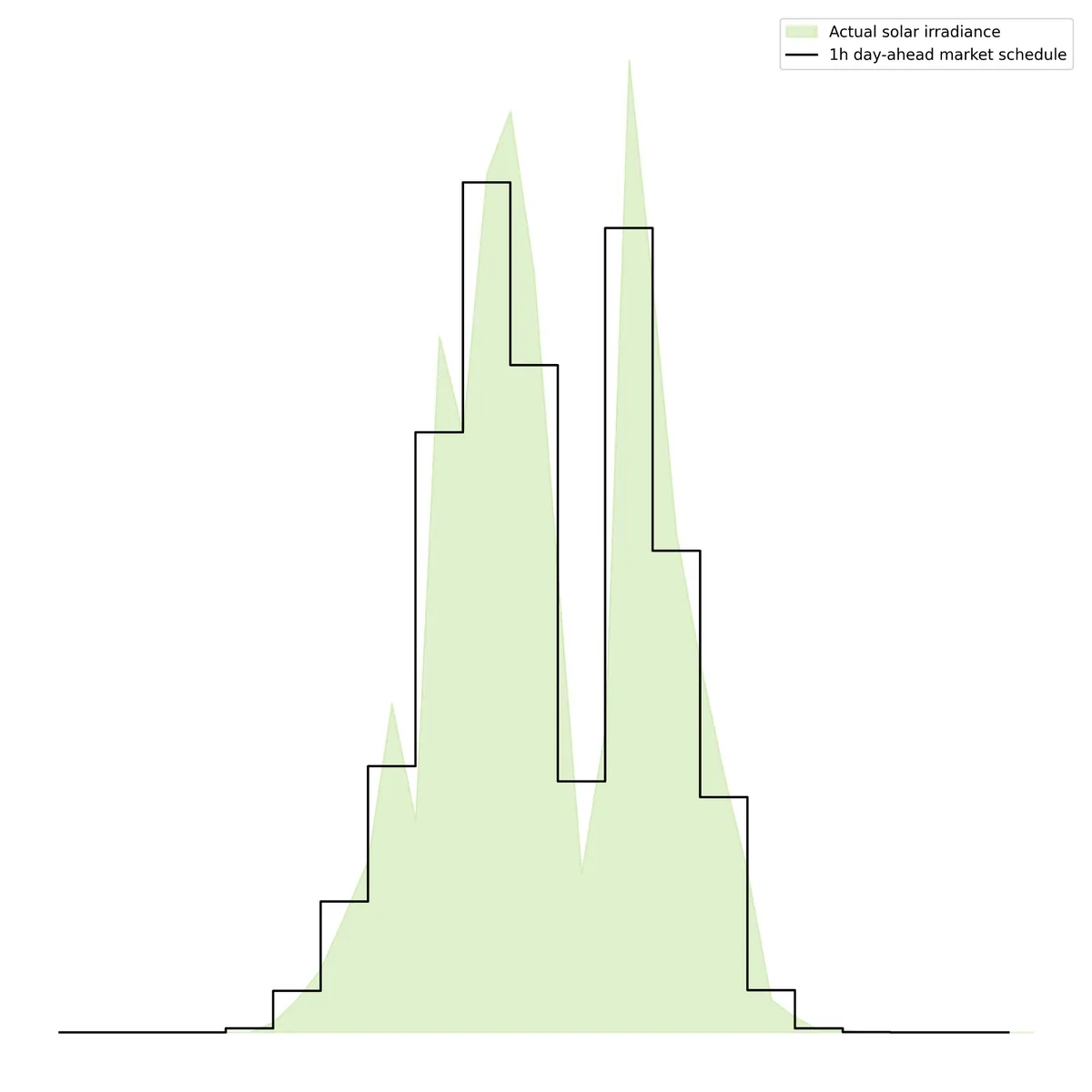
Figure 1: Actual solar irradiance vs. 1h day-ahead market schedule
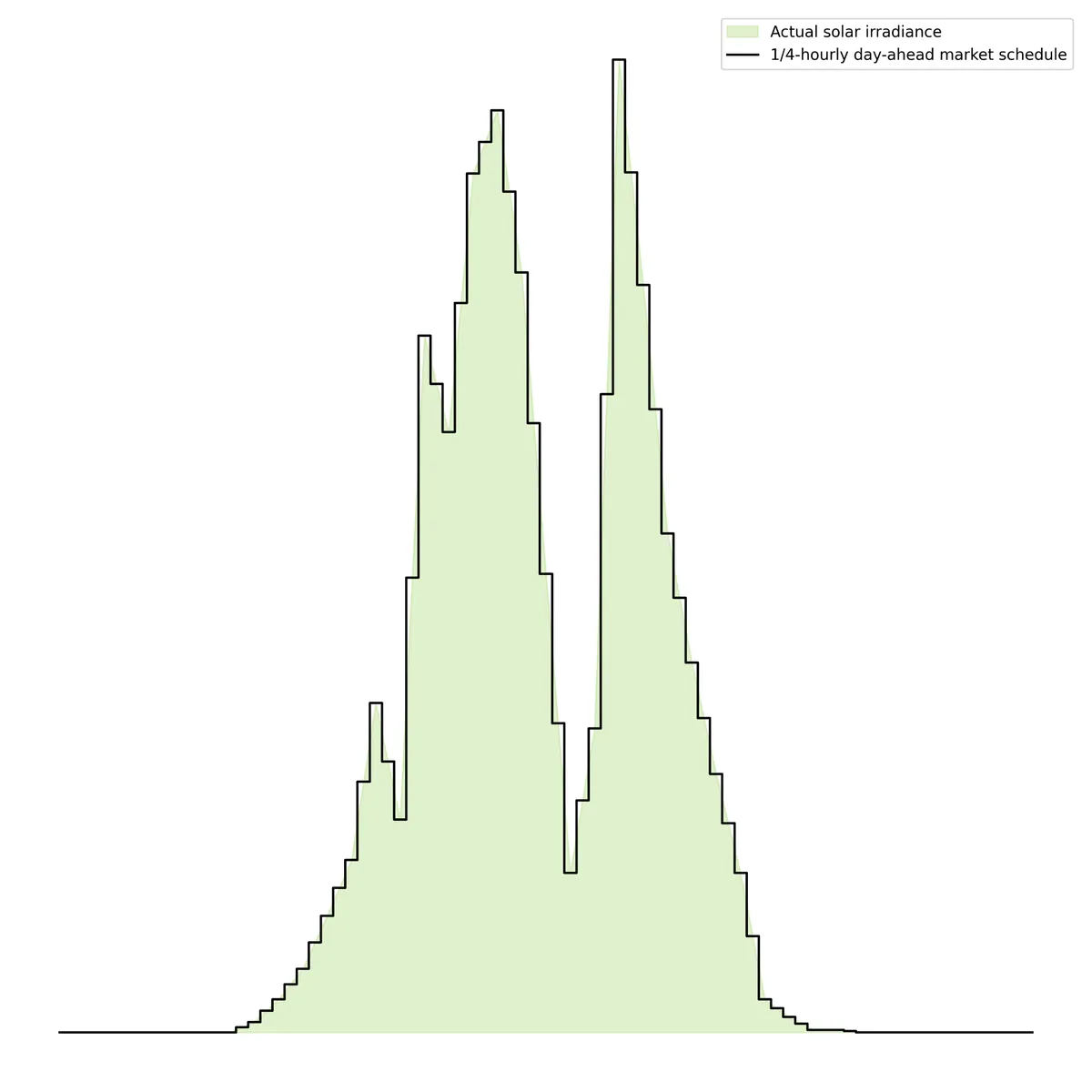
Figure 2: The expectation - Actual solar irradiance vs. 1/4-hourly day-ahead market schedule
Forecast Accuracy Comparison
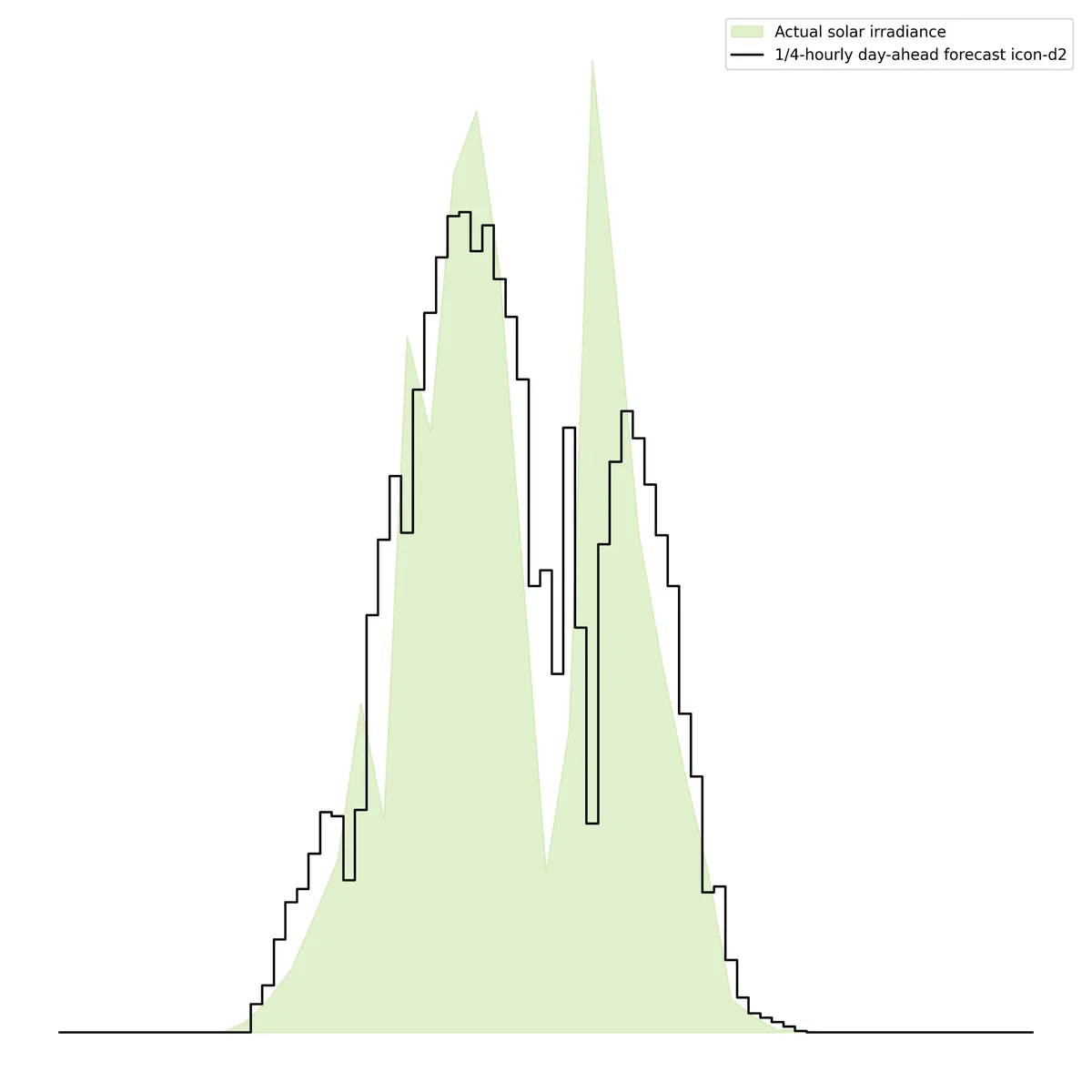
Figure 3: Actual solar irradiance vs. 1/4-hourly day-ahead forecast from ICON-D2
The Bottom Line
📉 Metrics actually look worse when comparing native quarter-hourly forecasts. Interestingly, accuracy improves if you just calculate hourly averages.
💡 Bottom line: "Skill is all you need." In forecasting, skill means one forecast performs better than another. What we really need now is skill in sub-hourly forecasting – not just finer time intervals.
At alitiq, we're working on advanced forecasting solutions that address these challenges, combining multiple data sources and AI-driven approaches to deliver truly accurate short-term predictions for the energy market.
Ready to Transform Your Business?
Discover how alitiq's forecasting intelligence can optimize your operations.
Contact Us